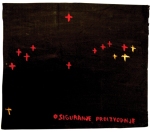
Thursday, 26 February 2015


Mladen Stilinović on LAZINESS / against WORK


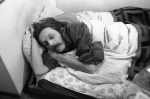
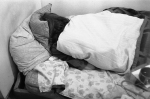
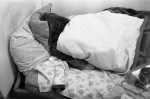
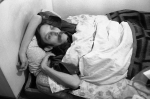
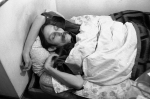
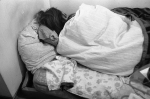
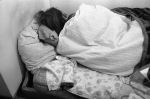
    from Artist at Work series (1978)
PRAISE OF LAZINESS
As an artist, I learned from both the East (socialism) and the West (capitalism). Of course, now when the borders and political systems have changed, such an experience will be no longer possible. But what I have learned from that dialogue, stays with me. My observation and knowledge of Western art has lately led me to a conclusion that art cannot exists any more in the West. This is not to say that there isn’t any. Why cannot art exist any more in the West? The answer is simple. Artists in the West are not lazy. Artists from the East are lazy; whether they will stay lazy now when they are no longer Eastern artists, remains to be seen.
Laziness is the absence of movement and thought, just dumb time – total amnesia. It is also indifference, staring at nothing, non-activity, impotence. It is sheer stupidity, a time of pain, futile concentration. Those virtues of laziness are important factors in art. Knowing about laziness is not enough, it must be practiced and perfected.
Artists in the West are not lazy and therefore are not artists but rather producers of something….. Their involvment with matters of no importance, such as production, promotion, gallery system, museum system, competition system (who is first), their preoccupation with objects, all that drives them away form laziness, from art. Just as money is paper, so is gallery a room.
Artists from the East were lazy and poor because the entire system of insignificant factors did not exist. Therefore they had enough time to concetrate on art and laziness. Even when thay did produce art, they knew it was in vain, it was nothing.
Artists from the West could learn about laziness, but they didn’t. Two major 20th-centery artists treated the question of laziness, in both practical and theoretical terms: Duchamp and Malevich.
Duchamp never really discussed laziness, but rather indifference and non-work. When asked by Pierre Cabanne what had brought him most pleasure in life, Duchamp said: “First, having been lucky. Because basically I’ve never worked for a living. I consider working for a living slightly imbecilic from an economic point of view. I hope that some day we’ll be able to live without being obliged to work. Thanks to my luck, I was able to manage without getting wet”.
Malevich wrote a text entitled “Laziness – the real truth of mankind” (1921). In it he criticized capitalism because it enabled only a small number of capitalists to be lazy, but also socialism because the entire movement was based on work instead of laziness. To quote: “People are scared of laziness and persecute those who accept it, and it always happens because no one realizes laziness is the truth; it has been branded as the mother of all vices, but it is in fact the mother of life. Socialism brings liberation in the unconscious, it scorns laziness without realizing it was laziness that gave birth to it; in his folly, the son scorns his mother as the mother of all vices and would not remove the brand; in this brief note I want to remove the brand of shame from laziness and to pronounce it not the mother of all vices, but the mother of perfection”.
Finally, to be lazy and conclude: there is no art without laziness.
WORK IS A DISEASE – KARL MARX  (Mladen Stilinović)                                                              
WORK IS A SHAME  (Vlado Martek)
Mladen Stilinović, 1993
Translated by Marija Maruši
work-cannot-01
work-cannot-02
Work Cannot no Exist, 1976
have-been-working
I Have Been Working on This Work SInce June 11, 1976
work-is-done
Work Is Done, 1980
an-attack-on-my-art
An Attack on My Art Is an Attack on Socialism and Progress, 1977
work-order-peace
Work, Order and Peace, 1978
all-ideas-must
All Ideas Must Appropriate Their Own Propaganda, (K. M.) 1998
conditions-for-my-work
The Conditions for My Work Are not in My Hands but Fortunately They Are not in Yours Either, 1979
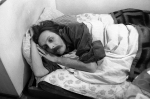
on-work
On Work, 1980-1984
[Better and more effective working methods from party basis to the Central Committee / Affirmation of work and self-government / Foreign currency creates work and not the law / Proving oneself via work only / Order, work and responsibility / Work more, complain, less / Construction of associated labor as a precondition for social development / Labor surplus – to the workers / Sock work]
on-work-installation
On Work (1980-1984), installation view at Van Abbemuseum, Eindhoven, 2008
work-is-disease
Work is a Disease – Karl Marx, 1981
work-is-a-word
Work is a Word, 1982
dead-bureaucracy
Dead Bureaucracy Says to Another Dead Bureaucracy You Are a Dead Bureaucracy, 1980
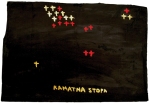
self-censorship
Self-censorship, (1980-2000), installation view at the Museum of Contemporary Art, Zagreb, 2012

Saturday, 27 December 2014

NE TRAVAILLEZ JAMAIS / CAPITALISM KILLS LOVE / ELOGIO DELL’AMATERISMO - TEXT IN PROGRESS - Lettera agli artisti antagonisti


NE TRAVAILLEZ JAMAIS / CAPITALISM KILLS LOVE / ELOGIO DELL’AMATERISMO - TEXT IN PROGRESS - Lettera agli artisti antagonisti

Vengo da una tradizione di sovversione in cui le persone consideravano come il loro vero Lavoro, il grande, importante Lavoro, non quello che gli faceva guadagnare i soldi necessari a vivere, ma quello per cui non avrebbero mai ricevuto soldi da nessuno, piuttosto avrebbero ricevuto difficoltà economiche, giuridiche, magari violenza fisica, magari perdita dei diritti civili, magari arresti e colpi di manganello.

Poi  ho incontrato una giovane tradizione artistica in cui le persone consideravano che il Lavoro, il vero, grande, importante Lavoro, non era quello che faceva guadagnare da vivere, ma anzi qualcosa che doveva restare assolutamente indipendente dal soddisfare qualunque tipo di necessita’ economica, e in generale qualunque bisogno che non nascesse al proprio interno e fosse relativo solo al Lavoro.  Ogni altro tipo di problema e di bisogno doveva essere risolto da ognuno come poteva, se poteva, altrove, o da altri, o in altri tempi, senza interferire.

I professionisti si vendono. Si vendono per denaro. Gli amatori lo fanno per amore. In questo senso l’amaterismo e’ un valore piu’ elevato del professionismo. Vendersi per denaro vuole dire vendersi al sistema neoliberista, corrispondere al ruolo che il sistema capitalista assegna agli artisti. Gli artisti, eccezionali ed originali per dovere di categoria ma di fatto del tutto allineati, il loro stile diverso e’ la loro uniforme, la loro funzione – se producono contenuti sovversivi – e’ il lavaggio di coscienza. Denunciare ed esprimere la critica perche’ tutto resti uguale. I conflitti si scaricano in azioni catartiche e si evacuano sul piano emotivo o estetico, senza andare mai intaccare i punti caldi, modificare i rapporti di potere, mettere in questione il terreno di relazioni dove si gestisce la materialita’ dell’arte e della societa’.

Lavorare a gratis, nel senso di lavorare non per soldi, e’ gia’ sottrarsi a questa funzione, liberarsi dal ricatto economico, trovare altrove la propria motivazione, la propria legittimita’, il proprio metro di valore.

Comunque come artisti vogliamo essere riconosciuti. Abbiamo questo bisogno, questa esigenza, questo vizio. Come artisti e come esseri umani. Ma riconosciuti da chi? Questo punto e’ essenziale. Chi e’ importante per noi? Qual’e’ il metro di valore a cui ci rivolgiamo? Qual’e’il parere che conta? Chi puo’ darlo?
Spesso, vogliamo essere riconosciuti da  chi e’ riconosciuto. Ed e’ riconosciuto solo chi e’ professionista, ed e’ professionista solo chi e’ riuscito a vendersi,  chi e’ entrato nel sistema dell’arte, passato dal filtro delle leggi del mercato e parte del gotham dei monopoli neoliberisti. Allora andiamo malgrado tutto a bussare alle porte di chi e’ riuscito a diventare un brand, a sbavare sulle istituzioni, le fondazioni, sperando che la nostra diversita’ e il nostro antagonismo si possano gloriare e rafforzare di un po’ della loro polvere di stelle, di un po’ di briciole della loro economia, per legittimarci, per poter dire che comunque siamo degli artisti seri, che possiamo dimostrarlo, che e’ ammesso anche da quelli che contano. Quelli che contano.

Andiamo a esibirci nei locali, nei bagni estivi, nei ristoranti, nei festival, li’ dove almeno ci danno 150 euro, per poter dire che non lavoriamo gratis, che non siamo dilettanti - e alla fine preferiamo farci sfruttare da chi ci paga poco e guadagna su di noi, piuttosto che lavorare non per denaro, per chi non guadagna niente e non paga niente, per chi vorremmo, per noi stessi, per una produzione di valore e di senso altro. Non e’ il problema che abbiamo bisogno di soldi per vivere. Il problema e’ che abbiamo bisogno dei soldi per giustificare le nostre azioni e il nostro valore.

Siamo deboli e trasparenti e permeabili perche’ non fondiamo la nostra legittimita’ sul nostro amore, sulla nostra spina dorsale, ma abbiamo sempre bisogno, anche nel conflitto, di riuscire comunque, se non per soldi almeno per approvazione, a venderci e a promuoverci a chi ha saputo vendersi. Allora il sistema resta il nostro referente ultimo. 

Mentre abbiamo bisogno di tutta la nostra consistenza, il nostro corpo integro, per mettere il focus sull’altrove che desideriamo, dove le cose che facciamo si completano nel loro proprio senso, in un’interazione libera con il contesto, nell’impatto che vogliamo avere.

Dividere i campi, nella schizofrenia a cui ci obbliga il sistema attuale, e’ attualmente una posizione legittima. Si fa’ qualcosa per guadagnarsi da vivere. E quello ha valore pragmatico, non si puo’ evitare. Poi si fa’ qualcos’altro per davvero, e quello ha un valore enorme, non calcolabile in denaro, e non deve avere niente a che fare con il profitto, con il reddito e con tutti i vincoli e i meccanismi del capitalismo. Capitalism kills love.

E’ la nostra percezione interna, invisibile agli occhi ma determinante in tutto, che crea il distinguo. La nostra attribuzione di valore. Quello che conta non e’ quello che rende. Quello che rende non conta molto. Quello che stiamo facendo per davvero, che ci da’ dignita’, quello in cui ci identifichiamo e per cui ci spendiamo e da cui riceviamo senso, il vero-grande-importante Lavoro, e’ svincolato, indipendente e superiore a qualunque meccanismo di reddito neolibersita.

Magari va’ contro al sistema, e’ antagonista o alieno. Bisogna farne un punto di forza. Questo gli attivisti, quelli davvero impegnati in forme di lotta e resistenza, lo sanno. Non possiamo aspettarci di essere pagati nel sistema per fare qualcosa che sia nettamente contro o fuori dal sistema.

Nhandan Chirco